The Problem Of Anger

Posted on Thursday, November 19, 2009 by help you from worry

BE ANGRY !!!

AND SIN NOT !!!

(EPHESIANS 4:26)

We all face the problem of sinful anger. We know what it is like to lose our temper, blow our stack and fly off the handle at others. Sometimes we tend to boil up and burn up within with bitterness and resentment. The Bible teaches that wrath or anger is one of the "works of the ________________" (produced by our old sinful nature--Galatians 5:19-20). Thus God tells the believer what do do with sinful anger:

"PUT IT_____________" (Colossians 3:8)

"PUT IT_____________" (Ephesians 4:31)

Indeed, the book of Proverbs has much to say about sinful anger (see Proverbs 14:17,29; 15:18; 19:11; 22:24-25; 29:22). James tells us that we are to be . . .

(see James 1:19)

SWIFT (QUICK) TO _________
SLOW TO _________ (see Proverbs 29:20)
SLOW TO _________

James 1:20 gives the reason why:

Man is swift to anger; but

God is ____________ ______ _______________ (Psalm 103:8).

Do You Blow Up or Boil Up?

Sinful anger is expressed in different ways.

1) SOME PEOPLE TEND TO BLOW UP

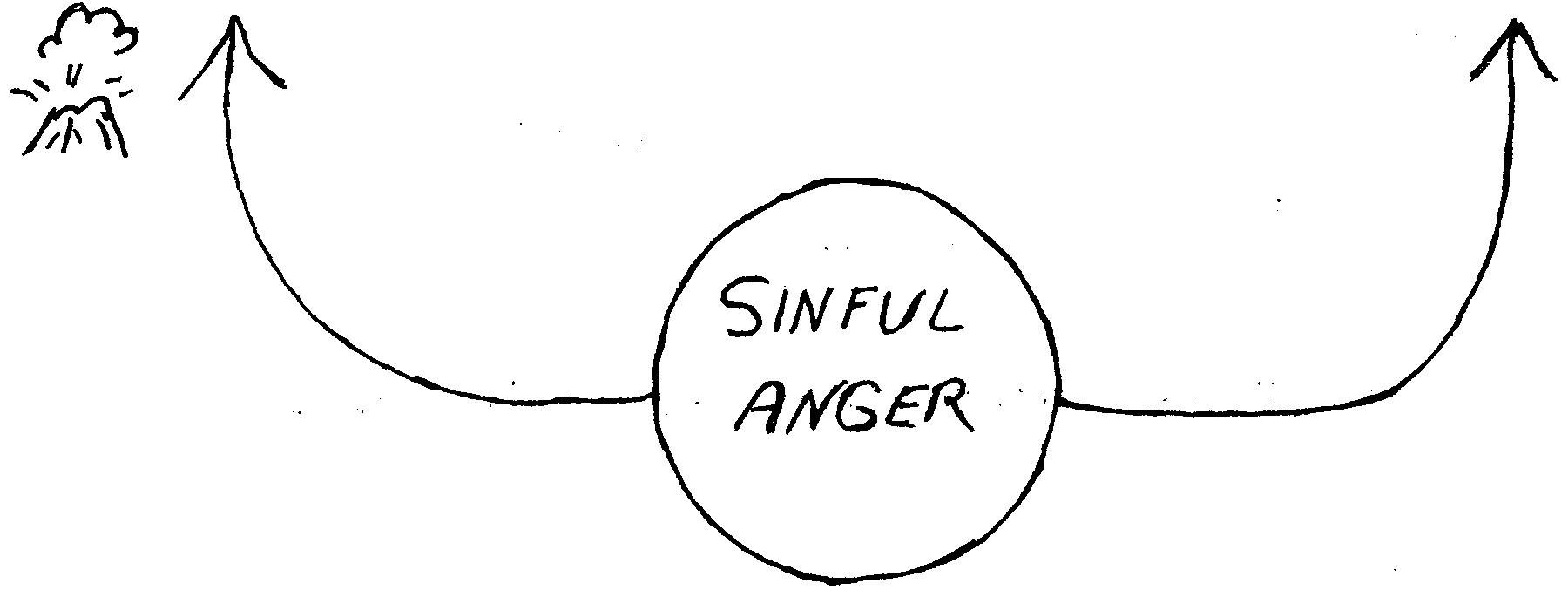
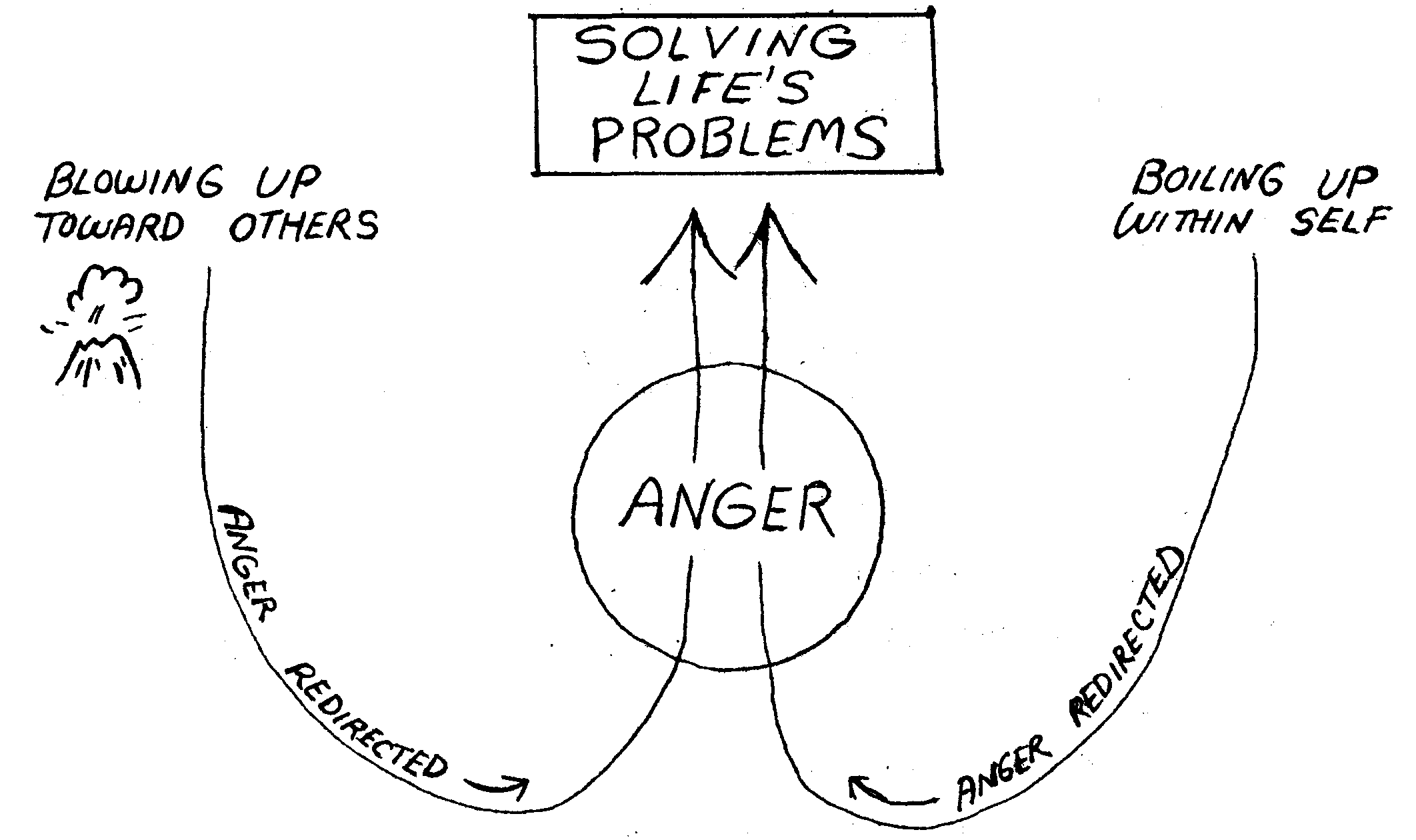
Many people are like a living, active volcano--they tend to erupt and explode (Mount Vesuvius style or Mount Saint Helens style!). They let it all come out, and the smoke and lava pours forth! Those who live near or around the eruption must suffer from the damaging effects of man’s sinful anger and temper. Anger which is allowed to BLOW UP primarily hurts and destroys OTHERS (although the person who explodes will also be hurt, just as in firing a gun at another there is often a powerful recoil).

2) SOME PEOPLE TEND TO BOIL UP

Sinful anger is also manifested in a less obvious yet equally damaging way. Some keep anger within, allowing this powerful emotion to slowly burn and boil. As they hold it in, bitterness and resentment slowly begin to build up. Boiling anger is just as sinful as exploding anger! The difference is that anger which is allowed to BOIL UP primarily hurts and destroys SELF (although others will certainly be affected by the built up bitterness and resentment).

BLOWING UP TOWARD OTHERS
BLOWING UP WITHIN SELF

Image136.gif (12086 bytes)

"I Just Can’t Control My Temper!"

Yes you can! You do it all the time! Consider this:

Mrs. Jones loses her patience and begins yelling at the
children. Mr. Jones, who is trying to read the paper,
finally can take it no longer! He violently explodes at
both his wife and the children! Suddenly, in the middle
of this eruption, the doorbell rings and it’s Pastor Smith
who has stopped by for a visit. Mr. and Mrs. Jones go to
the door and with a warm smile say, "Pastor Smith, it’s
so good to see you!"

Do you see what they did? They immediately controlled their temper (because they did not want their Pastor to enter their home and see two active volcanoes!!). If we can control our anger in such fleshly ways, how much more can the Spirit of God control this powerful emotion for God’s glory, if we will but let Him!

Is Anger Always Sinful?

Elsewhere in our notes we studied that worry (being rightfully worried and concerned about our relationship with Christ), fear (the fear of the LORD) and doubt (being rightly suspicious of others who may be trying to deceive us) can be very healthy and helpful emotional responses, even as God intended them to be. What normally is considered a VICE can become a VIRTUE if it is used in the right way according to God’s Word.

The same is true with ANGER. The Lord has built into man the emotional capacity to BE ANGRY, and this powerful emotion was originally meant to be helpful and not harmful. Anger can be a proper and useful emotion! Yes, there is such a thing as a HEALTHY, HOLY, RIGHTEOUS ANGER (sometimes called "righteous indignation").

Healthy, Holy, Righteous Anger

1) God is angry.

"God is _____________ with the wicked ______________ _______" (Psalm 7:11). God is always and ever angry against sin!

2) The Lord Jesus is sometimes angry.

Consider the following passages and discuss why the Lord Jesus was angry:

  1. Mark 3:5 (compare Matthew 12:10-12--these religious leaders were more merciful to a dumb animal than they were to their fellow man!).
  2. Mark 10:14 ("much displeased" should be translated "moved with indignation or anger").
  3. Mark 11:15-17 (compare John 2:13-17).
  4. Matthew 16:21-23.
  5. Matthew l8:6-7.
  6. Matthew 23:13-33.
  7. Revelation 2:6,15.
  8. Revelation 19:15-16.

3) The Holy Spirit sometimes causes men to be angry (1 Samuel 11:6).

4) God commands the believer to "BE _________________" (Ephesians 4:26).

Caution: The Lord knows that with frail men righteous anger can easily become sinful anger, so He adds the words, "and _______ not" (Eph. 4:26). It’s easy for us to get angry at the wrong things or to get angry at the right things for the wrong reasons! If your sinful anger has harmed someone else, don’t go to bed until you have corrected the problem in God’s way (prior to the age of electric lights people used to go to bed when the sun went down!).

As you consider the following people and their anger, decide whether their anger was SINFUL (indicate by "S") or RIGHTEOUS (indicate by "R"):

1. ______ Cain (Genesis 4:5-6).
2. ______ Esau (Genesis 27:41-45).
3. ______ Moses (Exodus 16:20; 32:19 Leviticus 10:16-17).
4. ______ Moses (Numbers 20:7-13; compare Numbers 27:12-14; Deut. 1:37; Psalm 106:33).
5. ______ Balak (Numbers 24:10).
6. ______ Saul (1 Samuel 11:6).
7. ______ Saul (1 Samuel 20:30).
8. ______ David (1 Samuel 17:26, 45-46).
9. ______ David (2 Samuel 12:5; note: David was right in getting angry at the sin of this man, but who should he really have been angry at?).
10. ______ Elisha (2 Kings 13:19).
11. ______ Asa (2 Chronicles 16:10).
12. ______ Nehemiah (Nehemiah 5:6).
13. ______ Jonah (Jonah 3:10; 4:1-11).
14. ______ Herod (Matthew 2:16).
15. ______ People of Nazareth (Luke 4:28).
16. ______ The Elder Brother (Luke 15:28).
17. ______ The Jerusalem Jews (Acts 7:54-58).
18. ______ Saul (Acts 9:1).
19. ______ Paul (Acts 13:9-11; Galatians 1:7-9).
20. ______ Satan (Rev. 12:12,17).

Anger Used for God’s Glory and Man’s Good!

Anger was intended to be a very constructive (not destructive) motivating force in our lives. It is a powerful emotion and this power may be used in good and helpful ways. God is glorified when we are angry in the right way and for the right reason!

"Blowing up" and "boiling up" has never solved one problem, nor has it ever helped one person! When we blow up or boil up, we are directing all of our energy at others and at ourself in a harmful way, and our problems only grow worse. How much better to redirect that energy and use that energy to attack and to solve the problem! Why not harness this vast supply of energy and put it to good use!

Am I angry at sin in my own life? Am I angry at the sinful ways in which I have treated my family and loved ones? Is all of my energy being used to straighten things out with the Lord and with others?

STOP BEING ANGRY AGAINST OTHERS AND AGAINST GOD!! BE ANGRY WITH YOURSELF IN A GOOD WAY!!

The Problem Of Fear

Posted on by help you from worry


fear.gif (3296 bytes)

Multiphobias

People FEAR many things. We can easily become FEARFUL and AFRAID. Some of these fears have been classified into various kinds of "PHOBIAS." ("Phobia" comes from a Greek word meaning "fear"). For example, consider the following:

  1. ACROPHOBIA--a fear of high places
  2. CLAUSTROPHOBIA--a fear of enclosed places
  3. CYNOPHOBIA--a fear of dogs
  4. HYDROPHOBIA--a fear of water
  5. NECROPHOBIA--a fear of death
  6. NOCTIPHOBIA--a fear of night

FEAR is not always wrong or sinful (even as WORRY is not always wrong). God has equipped man with the capacity to FEAR for man’s own protection and benefit. Though we often think of fear as a dreaded FOE, it can also be man’s best FRIEND. Fear is that FRIEND which keeps our hands away from the tigers’ cage at the zoo. Fear is that FRIEND that helps us to drive safely in the midst of heavy traffic. Fear is that FRIEND that helps us to respect and obey the police officer, lest we should get into trouble. Fear is that FRIEND that encourages us to study for our final exams. Can you think of other ways that fear serves as a friend?

Consider again the "phobias" listed above. Show how, under certain circumstances these FEARS can be helpful. (For example, "acrophobia" might help someone on top of a high ladder to proceed with much care and caution.) Show how these same FEARS can be harmful. (Consider for example "noctiphobia" when a child imagines that he sees a monster in the dark of his room at night.)

Friend or Foe?

FEAR can be healthy or harmful. FEAR can protect us or fear can destroy us. As we shall see, the right kind of fear will eliminate every wrong kind of fear. Please complete the following MATCHING exercise as you study verses which relate to FEAR or BEING AFRAID:

1. _____ Matthew 14:26

2. _____ Matthew 14:30 A. A healthy, right kind of fear (FRIEND)
3. _____ Matthew 2:22 B. A harmful, wrong kind of fear (FOE)
4. _____ Genesis 22:12

5. _____ Acts 27:17

6. _____ Proverbs 28:1 (The word "fear" is not used here, but the idea is certainly present.)
7. _____ 1 Peter 2:17
8. _____ Isaiah 8:12
9. _____ Isaiah 8:13
10. _____ Psalm 112:1
11. _____ Psalm 112:7
12. _____ Mark 5:36

The Origin of Fear

Find the first place in the Bible where FEAR is mentioned (HINT: Begin reading in Genesis chapter 3): Genesis 3, Verse ______ Was this a healthy, right kind of fear? _______ As you think about Adam’s fear, put the letter "F" before each of the following phrases which properly describe this wrong kind of FEAR:

1. _____ A direct result of man’s sin and guilt
2. _____ Running from God
3. _____ Running towards God ("cometh to God"--Heb. 11:6)
4. _____ Facing and fixing my problems
5. _____ Hiding and covering up my problems
6. _____ Avoiding the Lord
7. _____ Approaching the Lord
8. _____ Open and honest before God
9. _____ Ashamed before God, "having an evil conscience" (Heb. 10:22)
10. _____ Ever conscious of wrongdoing and of one’s own failure to fulfill his God-given responsibilities.

Does the believer who is hidden IN CHRIST ever need to be afraid of approaching a HOLY GOD (Hebrews 4:16; 10:19,22)? _________

Fear Not! Why Not?

What is the constant plea of God to those who belong to Him (see Lamentations 3:57; Isaiah 41:14; Joshua 8:1; Luke 12:32; Matthew 10:31; Acts 27:24; etc.)? F______________ N________ The Lord gives us many REASONS why we need not fear. Search the Scriptures and see if you can discover some of these reasons:

  1. Gen. 26:24; Psalm 23:4; Isaiah 41:10; 43:5; Jer. 46:28; Deut. 20:1
    I will not fear because ______________________________________
  2. Exodus 14:13-14; Deut. 3:22; 20:3-4; 2 Chron. 20:15 (compare v.17)
    I will not fear because ______________________________________
  3. Deut. 31:6,8; 1 Chron. 28:20
    I will not fear because ______________________________________
  4. Psalm 118:6
    I will not fear because ______________________________________
  5. Isaiah 41:13-14
    I will not fear because ______________________________________
  6. Isaiah 43:1
    I will not fear because ______________________________________
  7. Deuteronomy 7:18 (compare 20:1)
    I will not fear because ______________________________________
  8. Psalm 56:3,4,11; Psalm 112:7 (cf. Mark 5:36)
    I will not fear because ______________________________________
  9. Matthew 10:29-31
    I will not fear because ______________________________________
  10. John 6:20
    I will not fear because ______________________________________

UNDERSTANDING WHO GOD IS HELPS US NOT TO FEAR.

1)

Isaiah 41:10
I will not fear because HE IS MY _____________________________________

2)

Genesis 15:1
I will not fear because HE IS MY _____________________________________

3)

Proverbs 3:25-26
I will not fear because HE IS MY _____________________________________

4)

Psalm 27:1
I will not fear because HE IS MY _____________________________________

5)

Psalm 46:1-2
I will not fear because HE IS MY _____________________________________

6)

Hebrews 13:6
I will not fear because HE IS MY _____________________________________

7)

Psalm 91:2,5
I will not fear because HE IS MY _____________________________________

The King of Fears

What is man’s greatest fear (Heb. 2:14-15)? _________________________ Is this a legitimate fear for the UNSAVED (Heb. 9:27)? ________ What is even more fearful than physical death (Matt. 10:28; Rev. 21:8)? _______________________________ God describes DEATH as a killer-bee (think of a giant bumblebee!) who has a powerful and deadly sting for all its victims. What is the terrible STINGER on this killer-bee (1 Cor. 15:56; cf. Rom. 6:23; James 1:15; Ezekiel 18:4)? _____________________ What gives this STINGER its strength and power (1 Cor. 15:56; cf. Rom. 3:20; 7:7-13)? _______________ The Lord Jesus, through His death and resurrection REMOVED THE STINGER and ____________________ death (2 Timothy 1:10). Therefore, does the believer need to fear the KING OF FEARS, or may he bravely and joyfully face his hour of death (see 2 Tim. 4:6-8; 2 Pet. 1:13-14; Philippians 1:20-23, 2 Cor. 5:8; Luke 23:43)? _______________________________________________.

Fear and Love
And the greater of these is love!

FEAR and LOVE cannot dwell together, because the Bible says, "There is no _______ in ________; but perfect _________ casteth out _______, because _________ hath torment (punishment). He that ______________ is not made perfect in ________" (1 John 4:18). A mother might be terribly afraid of a mouse, but she would gladly risk her life against the most savage beast (such as a lion or bear) if necessary for the protection of her child whom she loves. A soldier might fear actual warfare, but he would willingly fight on the hottest battlefield if he loves his country and the cause for which he is fighting. Can you think of other examples of how love casts out fear?

As you examine the following, decide whether each phrase is describing FEAR or whether it is describing LOVE:

____ What can I do for him?

____ What will he do to me?

____ How can I help him?

____ How can he harm me?

____ What can man do unto me?

____ What can I do for man?

____ How can I give of myself for him?

____ How can I protect myself from him?

____ Shrinks away from others

____ Moves towards others

____ "Believes all things" (1 Cor. 13:7)

____ Very suspicious

____ Thinks of everything that might go wrong

____ "Thinketh no evil" (1 Cor. 13:5)

____ Concerned about self

____ Concerned about God and others

____ Produces hard work and labor(1 Thess. 1:3), tackling the problems at hand.

____ Fails to fix problems and refuses to face up to responsibilities

____ Looks at the problem (Matthew 14:30)

____ Looks past the problem to the God who has the solution

The Fear that Conquers All Fears

What is man’s supreme duty towards God (1 Pet. 2:17; Ecclesiastes 12:13; Prov. 1:7; Deut. 10:12; etc.)? ______________________ How long are we to do this (Prov. 23:17)? _____________ How long (Deut. 14:23)? ______________ How long (Josh. 4:24)? _______________ When can I begin to do this (1 Kings 18:12)? ____________ Who should do this (Psalm 34:9)? __________________ Who (Psalm 33:8)? ____________________________ How should we serve the Lord (Psalm 2:11)? _______________________ How should we worship the Lord (Psalm 5:7)? ___________________ How should we spend our time on earth (1 Pet. 1:17)? _________________

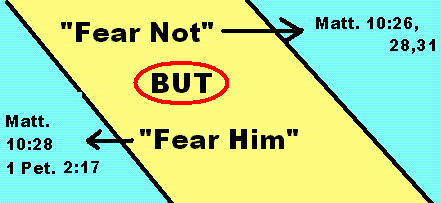
The fear of the Lord casts out all other fears. The fear of the Lord is healthy and clean and right (Psalm 19:9). Complete this MATCHING problem:

1. ______ Matthew 10:28
2. ______ Matthew 10:31
3. ______

Psalm 112:1

A. FEAR THE LORD!
4. ______ Psalm 112:7 B. DON’T FEAR ANYTHING ELSE!
5. ______ Isaiah 8:12
6. ______ Isaiah 8:13
7. ______ Psalm 34:4
8. ______ Psalm 34:9

The Fear of Men

Often, instead of fearing GOD we fear MEN! We begin thinking like this:

"What will they think of me?" "What will they say?" "Will they get angry?" "Will they be pleased?" "Maybe they will see me!" "I’m afraid of what they might do to me!" "Will they be upset or offended?" "Will they still be friendly towards me?" "What will they want me to say?" "What will they want me to do?" "Where will they want me to go?" "I’m afraid they will not be happy with me!" "I don’t think they will approve of this!" "They might frown on my actions!" "I hope they will really appreciate what I’m about to do!"

This then is the FEAR OF MEN. What is the FEAR OF GOD? To answer this question, simply read the above sentences again and substitute the word "GOD" for the word "they." This is the FEAR OF GOD.

Read Genesis 12:10-20; 20:1-11. Note especially Genesis 20:11. Was there any fear of God IN ABRAHAM? ________ Did Abraham fear men? ________ Was God able to protect Abraham, even without his lies and deception? _____ Can you think of times when the fear of men kept you from doing what you knew was right? Did Abraham learn to fear the Lord (Gen. 22:12)? _______

How To Recognize a God-Fearer

If a person really FEARS THE LORD, then the following will be true:

  1. Proverbs 3:7; 14:16; 16:6.; Job 28:28.
    He will _______________________________________
  2. Proverbs 8:13.
    He will _______________________________________
  3. Exodus 20:20.
    He will _______________________________________
  4. Nehemiah 5:15.
    He will _______________________________________
  5. Deuteronomy 5:29; 6:2; 13:4.
    He will _______________________________________

    Who should our close friends and companions be (Psalm 119:63)? ______________________________________________ How can we learn to fear the Lord (Deut. 4:10; 17:19; 31:11-13)? ___________________________________

Let Us Hear The Conclusion Of The Whole Matter
(See Ecclesiastes 12:13)

Personal Questions to Ponder:

  1. Are you afraid of displeasing the Lord?
  2. Are you afraid of not being right with the Lord?
  3. Are you afraid of sinning against a Holy God?
  4. Are you afraid of having less than God’s very best?
  5. Are you afraid of not hearing God’s "WELL DONE"?

CHOOSE THE FEAR OF THE LORD

The Problem Of Doubt

Posted on by help you from worry

The Problem Of Doubt

doubt.gif (3888 bytes)

God says what He means and means what He says! It’s Impossible for God to ______ (Heb. 6:18; Tit. 1:2) or deceive. Whenever God speaks, He speaks the truth, the whole truth, and nothing but the truth (Num. 23:19; John 17:17). God makes no mistakes and He is never wrong. People may err (be in error), but not the Bible (Matt. 22:29). In Mark 14:49 Jesus said that the _____________________ (that which God has said and which has been written down in the Bible) must be _________________________. Everything God says must come to pass! Therefore, what a terrible sin it is to DOUBT God’s Word and to QUESTION what He has said!

In Genesis 1:3 we read, "AND GOD SAID, Let there be light." What is the very next thing that this verse says? ___________________________ Did God’s Word come to pass?________

Write the first 3 words in
Genesis 1:6:

_____ ______ ________
darrow.gif (881 bytes)
GOD SPEAKS

Write the last 4 words in
Genesis 1:7:

_______ ______ _______ _____
darrow.gif (881 bytes)
AND IT COMES TO PASS

("THE SCRIPTURES MUST BE FULFILLED")

Please complete the following chart:

God Speaks

Genesis Chapter 1

And It Comes to Pass

v. 9 _____ ______ ________ dry land appears v.9 _____ ___ _____ ____
v.11_____ ______ _______ vegetation v.11_____ ___ _____ ____
v.14 ____ ______ ______ sun, moon, stars v.15 _____ ___ _____ ____
v.24 ____ ______ ______ land animals v.24 _____ ___ _____ ___
v.29 ____ ______ ______ food for man and beast v.30 ____ ___ _____ ___
Psalm 33:9---"For ________ _________________ and _____ _________ __________
Psalm 148:5---"for ______ ______________ and _______ _________ _____________

All that God says must come to pass! See if you can find the FULFILLMENT for the following promises and predictions of God:

AND GOD SAID (Prediction) AND IT WAS SO (Fulfillment)
1. Isaiah 7:14 Matthew 1: ______
2. Psalm 22:18 Matthew 27: _____
3. Matthew 26:34 Matthew 26: _____
4. Matthew 27:63 Matthew 28: _____
5. 1 Kings 13:3 1 Kings 13: ______

Can you find other promises and fulfillments in the Bible?

Has God ever failed to fulfill a promise (Joshua 21:45; 23:14)? _______ Everything will come to pass just as God has said!

Questioning God’s Word

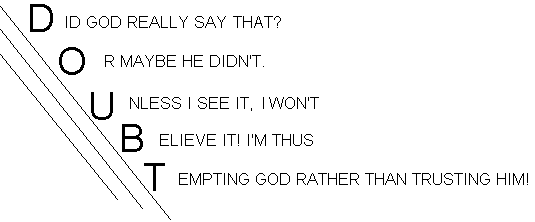
Satan is called the great L ________ (John 8:44) and DECEIVER (Rev. 20:3,8,10). In Genesis 3:1 he questioned God’s Word, "YEA, ________ ______ ________" ("DID GOD REALLY SAY THAT?"). Ever since the Serpent met Eve, he has been trying to make men and women question and doubt God’s Word. One example of this is found in 2 Peter 3:3-4 where the scoffers (mockers) of the last days are saying, "WHERE IS THE _________________ OF HIS ______________?"

Genesis 3:1
HATH GOD SAID?
(Did God really say not to eat?)

2 Peter 3:3-4
HATH GOD PROMISED?
(Is Christ really coming again?)

What PROMISE was given to Abraham in Genesis 17:15-16? _______________________________ Did Abraham BELIEVE God’s Word or did he QUESTION God’s Word (Gen. 17:17)? ______________________________________________ What PROMISE did Sarah hear in Genesis 18:10? ___________________________________ Did Sarah BELIEVE God’s Word or did she QUESTION God’s Word (Gen. 18:11-12)? ________________________________ Therefore, this son was named ______________ (Gen. 17:19) which means "LAUGHTER" as a constant reminder to his parents that they should never DOUBT God’s Word or LAUGH at God’s Promises!!

Contradicting God’s Word

Not only does Satan want us to QUESTION and DOUBT God’s Word, but he also wants us to CONTRADICT and DENY what God has said. In Genesis 2:17 God told Adam that he would surely (most certainly) ________ if he would eat the forbidden fruit. Did God’s Word come to pass (Genesis 3:6; Romans 5:12)? _______

Genesis 2:17 Genesis 3:4
God said
"Thou shall surely die!"
The Serpent Said:
"Ye shall not surely die!"

Consider Matthew 16:21-22. Jesus SPOKE and said He must suffer, die and be raised again. Peter should have said, "Lord, You have SPOKEN, and even though I don’t understand it, IT MUST BE SO!" But Peter said the very opposite, "THIS SHALL _______ BE!" Who inspired Peter to CONTRADICT and DENY God’s Word (Matthew 16:23)? ___________________________

It is a terrible sin not to believe what God says. Indeed, according to 1 John 5:10, the person who does not believe God is actually accusing God of being a _____________! PERISH THE THOUGHT! MAY IT NEVER BE!

Is It Ever Right To Doubt?

Sometimes DOUBT can be a virtue! At times it is necessary to question what someone says! If we believe everything people tell us, we can get ourselves into trouble. Though we usually believe what men tell us (see 1 John 5:9), we should not always believe what people say, lest we be DECEIVED:

    1. Should Joshua have doubted the words of the inhabitants of Gibeon (Joshua 9:3-15)? _______
    2. Should the man of God have doubted the old prophet (1 Kings 13:11-18)? _________
    3. Should Eve have doubted the Serpent (Genesis 3:1-5)? ______
    4. Should the wise men, have doubted Herod (Matthew 2:8)? ______
    5. Should Naaman have doubted Gehazi (2 Kings 5:20-27)? ________
    6. Should Abimelech have doubted Abraham (Genesis 20:1-5)?______
    7. Should the world doubt the man of sin (2 Thessalonians 2:3-12)? ______

Most often we believe the words of men (1 John 5:9), but sometimes men lie and deceive, and we need to be careful. Sometimes it’s right to doubt what men say, but it is never right to doubt what God has said! Why not? ____________________________________________________

The Doubting Disciple

Who was the doubting disciple (John 20:24-29)? _______________ What pleases God the most, belief based on sight or belief based on what God has said (John 20:29)? ________________________ Was Thomas the only one who doubted the resurrection (Matthew 28-17; Mark 16:14; Luke 24:17-20? _________ Was Thomas the only doubting disciple (Matthew 14:31)? ______ Did doubting Thomas become convinced Thomas (John 20:26-28)? _______

Assurance of Salvation

Many people have doubts about their salvation: "Am I really saved?" "Do I really have eternal life?" "Have I lost my salvation?" "Have I committed the unpardonable sin?" "Will I really go to heaven when I die?" "I don’t feel like I’m saved."

It is wonderful to know that we do not need to doubt our salvation, but we can K_________ that we are saved and have eternal life (1 John 5:13). This assurance ("I’m sure that I’m saved") is not based on FEELINGS, but it is based on what God has said:

JESUS SAID, "HE THAT BELIEVES ON ME
HAS EVERLASTING LIFE" (John 6:47)

Have you believed on Christ (John 3:16)? Have you come to Him as a lost sinner who desperately needs a Saviour (John 6:37)? Have you received Christ as your Saviour from sin (John 1:12)? Do you believe that Christ died to take the punishment for your sins and rose again to give you His life (1 Cor. 15:3-4; Rom. 4:25)? Are you RIGHT NOW trusting in Christ and in Christ alone for your salvation (Acts 4:12)? If so, then God says that you HAVE ETERNAL LIFE (John 6:47)! Don’t doubt Dim or question Him or accuse Him of being a liar (1 John 5:10), but just REST down upon what HE HAS SAID and start to enjoy the gift He has given you (Romans 6:23; Ephesians 2:8-10; 2 Corinthians 9:15)!

Tempting The Lord
A Dangerous Form of Doubt

1. What does the place name "MASSAH" mean (Ex. 17:7; Deut. 6:16)? ____________________________________

2. What question did the children of Israel ask in Exodus 17:7? ____________________________________________________

How did the LORD previously prove that He was among His people,
in Exodus 14:13-31?___________________________________________
in Exodus 15:22-27? ___________________________________________
in Exodus 16:1-31? ____________________________________________

Thus we can say that their question in Exodus 17:7 was an expression of (circle one) (a) innocent curiosity as to whether or not God was with them (b) a deep inner belief that God really was with them (c) doubt as to God’s care and provision for their every need (d) their concern for Moses--they asked Moses this question just to see if their leader had the proper theological credentials.

3. According to 1 Samuel 17:39 we learn that TESTING (tempting) involves doubting the quality or character of something. David doubted the quality and suitability of what? ___________________________________ If your life depended upon jumping out of an airplane with a parachute, would you want that parachute to be tested by an expert before it is time to jump? ________ Which did David trust more--his armour or his God? _______________ Is God worthy of our complete unquestioning trust or do we first need to test Him before we will trust Him? ___________________________________________________

4. TESTING (tempting) also involves questioning. As you do the following matching exercise, pay close attention to the various QUESTIONS that are asked in the various situations of testing:

THE QUEEN OF SHEBA TESTING SOLOMON

1) ____ Is Solomon really as wise as they tell me he is? Let's see how well he answers my QUESTIONS!

A. Exodus 16:4

B. Exodus 17:7

C. Deut. 8:2

D. Deut. 13:3

E. Psalm 78:18-19

F. 1 Kings 10:1
2 Chron. 9:1

G. Judges 2:22

THE LORD TESTING HIS PEOPLE

2) ____ Will they walk in My law or not?
3) ____ Will Israel keep God's commandments of not?
4) ____ Will you love the LORD your God with all your soul or will you be deceived by a false prophet?
5) ____ Will they keep the way of the LORD or not?

GOD'S PEOPLE TESTING THE LORD

6) ____ Can God furnish (provide) a table in the wilderness?
7) ____ Is the Lord among us or not?

Therefore, it can be said that we test God whenever we DOUBT AND QUESTION HIS CHARACTER, that is, whenever we question His faithfulness, His power, His care, His concern, His presence, His love, His fairness, His sovereign working, etc.

5. Matching:

1. ____ The man who tests God says: A. Don’t test Him, trust Him!
2. ____ The man who trusts God says: B. God is faithful!
3. ____ God has every right to say: C. Will you be faithful to Me?
(compare Judges 2:22)
4. ____ A helpful rule for the believer: D. Is God faithful?

6. Read Numbers 21:4-6. According to the New Testament commentary on this passage (1 Cor. 10:9), how is their sin identified and described? ________________________________________________ Thought question: In what way did they question God’s character? _____________________________________________________________________________

Why is Numbers 21 :4-6 relevant and important to us today according to 1 Corinthians 10:9,11?
__________ ___________________________________________________________
_____________________________________________________________________

7. Today we tempt the LORD whenever we question and doubt

1.____ God’s sovereign working in our lives for our good. A. Phil. 4:13

B. Phil. 4:19

C. Exodus 17:7
Psalm 46:1

D. Romans 8:28

E. Psalm 23:1
2.____ God’s shepherding care and concern.
3.____ God’s super-abundant power and ability for every situation.
4.____ God’s ample supply for every need that we have.
5.____ God’s ever present help in time of trouble

8. Did the Lord Jesus need to test God as to whether He would really keep His promise of angelic protection and care (Matthew 4:6-7)? ______ Did God the Father fulfill this promise (v.11)?_______

9. What is the conclusion to this whole matter (Deut. 6:16)? _____________________________________________________________________

10. True or False: _____________ Israel tempted the LORD because they had no clear evidence or proof of God’s working on their behalf (Psalm 95:9).

We do not need to prove (test) God because God has already proven Himself to be everything He said He is! If God could save your soul (solve your greatest problem), can He also take care of your day by day problems? _______ Does it make much sense to QUESTION or DOUBT His problem solving ability by daily complaints, murmurings and worries? __________

The Problem Of Worry

Posted on by help you from worry

Said the robin to the sparrow, "I should really like to know
Why these anxious human beings rush about and worry so."

Said the sparrow to the robin, "Friend, I think that it must be
That they have no Heavenly Father, such as cares for you and me."

The word "worry" (Greek--merimna) means "anxiety, care, that which divides, distracts the mind and which draws a troubled person’s mind in different directions." Sometimes the word is used of a healthy and helpful concern and care (1 Corinthians 7:32,34; 12:25; 2 Cor. 11:28; Phil. 2:20), but it is also used of an unhealthy and harmful concern and care, which we call "WORRY."

CARES AND CONCERNS WHICH
DIVIDE AND DISTRACT THE MIND
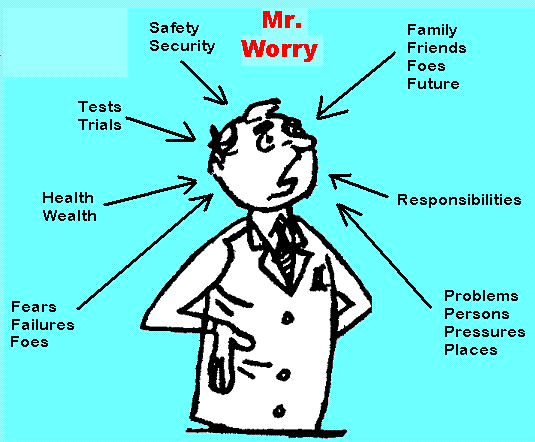
People worry about ANYTHING and EVERYTHING. Look up the following verses and write down some of the things people worry about:

  1. Matthew 6:31 ____________________________________________________
    (Exodus 15:24; 16:3) ____________________________________________________
  2. Matthew 6:34 ____________________________________________________
  3. Matthew 10:19 ____________________________________________________
  4. Luke 10:41 ____________________________________________________

There are at least six reasons why we should never worry:

1) Worry is disobedience.
2) Worry is unbelief.
3) Worry is a form of atheism.
4) Worry can lead to physical problems.
5) Worry is illogical (senseless).
6) Worry can do no good.

Let’s take time to consider each of these:

1) Worry is Disobedience.

In Philippians 4:6, the Lord says, "Be C_______________ (full of cares and anxieties) for ___________________" which means "WORRY ABOUT NOTHING" or "DO NOT WORRY ABOUT ONE THING" or "STOP WORRYING ABOUT EVERYTHING." Therefore, whenever we worry about ANYTHING, we are DISOBEYING God’s command here in Philippians 4:6! When God tells us not to worry, He means it! God sees worry as SINFUL DISOBEDIENCE. Is that how we see it?

2) Worry is Unbelief.

The Lord Jesus gave some important instructions about "WORRY" in Matthew 6:25-34. In this passage, what verse clearly indicates that worry is UNBELIEF? Verse _______ The person who is troubled with worries and cares is really saying, "I DO NOT BELIEVE that God loves me and cares for me and is able to take care of my problems!" Worry and trust cannot live together in the same house. As long as trust abides, worry can never enter. When worry comes in, trust has already left! Worry starts where faith ends.

3) Worry is a Form of Atheism.

The atheist says, "T____________ I_____ N____ G________" (Psalm 14:1). The person who worries is really saying, "THERE IS NO GOD who can handle my problems and take care of my life and my future." The one who worries, as well as the atheist, is a F___________ (Psalm 14:1).

4) Worry Can Lead to Physical Problems.

Stomach ulcers and other physical problems can often result from needless worry and anxiety. Not only is worry spiritually unhealthy, but it is also physically unhealthy. Worry can never help us, but it can harm us.

5) Worry is Illogical (Senseless).

Worry makes no sense. In Matthew 6:25-26, the Lord Jesus illustrated how ILLOGICAL worry really is. Let’s look first at verse 25:

T___________ N___ T________________ (do not be anxious, do not be worried) for your LIFE, what ye shall eat, or what ye shall drink; nor yet for your BODY, what ye shall put on (Matthew 6:25a).

The Lord Jesus then asked, "Is not the LIFE ___________ _________ meat (food, nourishment)?" What is the answer to this question? _________ "Is not the BODY more than raiment (clothing)?" What is the answer? ________

Which is greater (more important), the LIFE that God has given to you or the FOOD that God has given to you? ____________________________________________ Would you rather have your LIFE or would you rather have a HAMBURGER? _________________________ Can you survive without a hamburger? ______ Can you survive without your life? ______ IF GOD HAS GIVEN YOU LIFE (which is the greater gift), WILL HE NOT ALSO GIVE YOU THE FOOD AND DRINK THAT SUPPORT LIFE (which are the lesser gifts)? If God gave you the greater, will not He give you the lesser? _______ The worried person is really saying, "The God who gave me LIFE is unable to give me FOOD and DRINK." Does that make sense? ________

Which is greater, the BODY that God has given to you or the CLOTHES that God has given to you? ____________________________ Would you rather have your BODY or would you rather have a SUIT or a DRESS? ______________ Can you survive without a suit or a dress? _____ Can you survive without your body? _____ IF GOD HAS GIVEN YOU A BODY (which is the greater gift), WILL HE NOT ALSO GIVE YOU CLOTHES THAT COVER THE BODY (which are the lesser gifts)? _______ If God gave you the greater, will He not also give you the lesser? _____ The worried person is really saying, "The God who gave me my BODY is unable to give me CLOTHES to cover it." Does that make sense? _______

Illustrations: Suppose a father gave his child an expensive battery operated toy as a birthday present. Do you think this father would also supply batteries to go with it? _________ Suppose a father goes to all the trouble of constructing a basketball court (with hoops and everything) in the backyard for his son. Do you think he would also supply a basketball to go with it? _______ When Mom cooks supper, does she also supply all the plates, glasses and silverware to go with it? _______ Likewise, if God has given us a LIFE and a BODY, will He also supply all of our NEEDS (Philippians 4:19)? ________

Now consider verse 26 (Matthew 6): "Behold the __________ of the ______: for they sow not, neither do they reap, nor gather into barns; yet your _________________ ______________ ______________ _______." Again Jesus asked a question: "Are ye not much better than they?" What is the answer? _______ Which are more important and valuable to God, birds or men (Matthew 10:31)? _________ If GOD FEEDS AND CARES FOR BIRDS (which are of lesser value), WILL HE NOT FEED AND CARE FOR MEN (which are of greater value)? ______ If a mother feeds and cares for the family cat, will she not do the same for the family children? ______ If a father takes good care of the family car (feeds it with gas, keeps it clean and polished), will he not do the same and much more for his children? _______ The worried person is really saying, "The birds are of more value to God than me!" Does that make sense? ________

6) Worry Can Do No Good.

Worry has never been able to help anyone. Worry has never accomplished anything. Worry has never solved even one problem. Worry can look at problems but it can never solve problems. Worry is useless and unprofitable. Worry does absolutely no good. The Lord Jesus said it this way, "Which of you ______ _____________ _____________ (by being anxious, by worrying) can add one cubit unto his stature?" (Matthew 6:27). What is the answer to this question? ___________________________

The word translated "stature" is used in two different ways. It often means "age" (John 9:21,23; Hebrews 11:11), but it can also mean "stature" (how tall a person is)--(see Luke 19:3). Let's think about which meaning best fits in Matthew 6:27 ("stature" or "age").

  1. If the word means "stature" (as translated in our King James Bible), then the Lord Jesus was saying that a person can never add one cubit (half a yard or 18 inches) to his stature or height.
  2. If the word means "age," then the Lord Jesus was saying that a person can never add one cubit to his age (life span). The verse might then be paraphrased, "Who among you is able, by means of worrying, to lengthen the pathway of his life by even one cubit?"

Which meaning best fits in this verse? Does it mean the height of a person’s body or the length of a person’s life? The answer is found in a parallel passage, Luke 12:25-26: "And which of you with taking thought can add to his stature (or age) one cubit? If ye then be not able to do that thing which is ____________ why take ye thought for the rest?" Thus, Christ says that adding one cubit is doing what is LEAST (something very small and insignificant). IS IT A SMALL AND INSIGNIFICANT ACCOMPLISHMENT FOR A PERSON TO GROW 18 INCHES? ______ Can adding half a yard to one’s height be called "LEAST"? ______ Would anyone really want to be a cubit taller, except possibly a dwarf or a child? _______ Would a grown man want to grow into a GOLIATH? _______

Do most people worry about how tall they will be or about how long they will live (compare 2 Kings 20:1-3)? _____________________________________ Do people usually worry about their LIFE or their HEIGHT (Matthew 6:25)? ____________________ Therefore the meaning that would make the most sense is that "stature" refers to living longer, not growing taller.

A cubit, which is normally used as a measurement of length, can also be used as a measurement of time. Sometimes when a person has a birthday, he will say, "Well, I have reached another milestone." The Psalmist speaks in similar terms in Psalm 39:4-5:

"LORD, make me to know mine end, and the _______________ of my days....Behold, thou hast made my days as an ________________."

LIFE IS SHORT!
DEATH IS SURE!
SIN THE CAUSE !
CHRIST THE CURE!

To lengthen a person’s life by a small amount is an insignificant thing, yet worry can never do this! If anything, worry SHORTENS life! A man might "worry himself to death" but he cannot worry himself to a longer, span of life. The length of our time on earth is in God’s hands. Our days will not be increased by worrying. Anxiety will never result in a longer, richer and fuller life.

WORRY CAN DO NO GOOD!!!

1) What Should I Do Today, WORRY or WORK?

"Do not worry, therefore, about tomorrow: for tomorrow will worry about itself. Each day has enough evil (trouble, problems) of its own" (Matthew 6:34; translated from the Greek).


Worry is concern and anxiety over the future. We worry about what might happen tomorrow. Do we know what will really happen tomorrow (James 4:14; Proverbs 27:1)? _____ Who does know what will take place tomorrow (Isaiah 46:9-10; compare Mark 13:23; John 14:29; 16:3-4.)? _______ We do not know what the future holds, but we know WHO holds the future!

Please complete the following matching problem, as you consider two important days: 1) TODAY (this present moment which I can grasp and lay hold of) 2) TOMORROW (that future moment which lies ahead and out of reach):

1. _______ The day of salvation (2 Corinthians 6:2)
2. _______ The time to listen to God (Hebrews 4:7) A. TODAY
3. _______ The time to seek God (Isaiah 55:6) B. TOMORROW
4. _______ The day most people worry about (Matthew 6:34)
5. _______ The day many people foolishly waste (Proverbs 6:6-11)
6. _______ The day in which we can work (1 Corinthians 15:58)
7. _______ The day for which we can only wait (Acts 1:4)
8. _______ The day of present opportunity (Ephesians 5:16)
9. _______ The day of future uncertainty (Proverbs 27:1)
10. _______ The day which may never arrive (Luke 12:19-20)

According to James 4:13-17, it is wrong and sinful to (circle the correct answer):

  1. Make plans for the future.
  2. Leave God out of my plans.

It is never wrong to plan for tomorrow today (see Proverbs 6:6-8; Genesis 41:33-37) but it is always wrong to worry for tomorrow today (Matthew 6:34).

Today’s cares are ENOUGH! How foolish to ADD tomorrow’s cares to those of today! Tackle today’s troubles, and let tomorrow take care of itself. The Lord does not give us strength to face tomorrow’s problems today. He gives us strength to face today’s problems today (2 Corinthians 12:9-10; Philippians 4:13; Colossians 1:11). The burden of tomorrow’s cares added to the load of today’s trouble is too much for any man to bear. According to Matthew 6:34 we must put all of our strength and energy and resources into solving today’s problems. If we WORK on tackling today’s troubles then we will not have time to WORRY about tomorrow’s troubles.

Suppose as a lumberman, your assignment is to cut down an entire forest. Instead of WORRYING about whether you will ever be able to complete the job, you begin WORKING on it. Pour all your strength and energy and effort into the work, and you will be amazed to see several tall trees fall down each day. Soon you will realize that the forest was not as big as you first thought it was. Before too long not a tree will remain standing.

The legend is told of one lumberman who worked in this way, giving his all to the job each day. Finally after weeks of hard work he reported back to his boss, "I finally finished cutting down the SAHARA FOREST." In fact, he did so well that they had to rename it! Remember, the man who removed the mountain had to start by carrying away small stones!

On the other hand, if the lumberman were to look at the entire forest, and if he were to begin to be anxious about how the job would ever get done, then he would be putting most of his energy and effort into WORRYING, instead of WORKING! How sad! Worry accomplishes nothing! Worry is unable to cut down even one tree! As the days advance, nothing is being done, the forest continues to stand, and the WORRY WORSENS! The Lord Jesus said we must not worry about tomorrow (whether the forest will be cut down)! We must trust God as we tackle today’s troubles! We must be so busy working on today’s problems that we have no time to worry about tomorrow!

With these things in mind, how would you begin to solve these problems?

  1. Your English teacher requires you to read a 250 page book and then to report on it in two weeks.
  2. Your history teacher assigns you a 20 page paper.
  3. Your Mother is rushed to the hospital and must remain there for two weeks. You are responsible to do most of the shopping, cooking, cleaning and washing for the entire family.
  4. You have been given a part in a Sunday School Play, and you must memorize three pages of material.
  5. Football season will be here in three months (after the summer months) and you are concerned about whether or not you will make the team.

(The class may think of other problems and how to tackle them by WORK rather than by WORRY.)

2) Casting My Cares on the Christ Who Cares

"Casting all your ____________ (worry, anxiety) upon Him; for He ________________ for you" (1 Peter 5:7).


1. What must I do with my care and worry (1 Pet. 5:7)? _______________________________________________________ The word "casting" means "to throw something upon something else." In Luke 19:35 the people threw their ___________________ upon the ________________. In 1 Peter 5:7 the believer is to throw his ____________ upon _____________________.

2. How much of my care and worry should I throw upon the Lord (1 Pet. 5:7)? ________

Imagine if you could hire one of your friends to do all of your worrying for you! It would be wonderful if he could handle all of your cares. Whenever a problem or difficulty should arise, all you would need to do is tell him about it, and he would worry about it for you! You would not have to worry about it at all! That would be his business. You would then be free to live as if you did not have a care or worry in the world! You have thrown all your care on another person. You do not even need to worry about how much money you should pay your friend for doing all your worrying for you. That is his worry! (Jay E. Adams, You Can Stop Worrying, p.3).

The Lord will not do your worrying for you, because GOD NEVER WORRIES about anything! Yet the Lord tells you to throw all your care upon Him. If you give your cares to the Lord and leave them with Him, then you will be free from worry! Let God carry your cares:

"________ thy ______________ upon the __________, and He shall _______________ thee" (Psalm 55:22).

The burden of your cares is too great for you to bear! The worry and care will crush you unless you throw it all upon the Lord!

3. Why should you decide to throw your care and worry upon the Lord (1 Pet. 5:7)? __________________________________________________________________

God cares about you! God is concerned about you. It matters to God about you. It is a concern to Him about you. He ever cares and He never stops caring about you. HE CARETH FOR YOU!

Does God care for birds (Matt. 6:26)? ________
Does God care for lilies (Matt. 6:28)? ________
Does God care for sheep (Matt. 12:11-12)? ________
Does God care for oxen (1 Corinthians 9:9-10)? ________
Does God care for sparrows ((Matt. 10:29-31)? ________

IN LIGHT OF THE ABOVE . . .

Matthew 6:26: "Are you not much better than they?" ________
Matthew 12:12: "How much then is a man better than these?" _________
Matthew 10:31: "Are you not of more value than they?" ___________

Therefore,
DOES GOD CARE FOR YOU ?

Which would cause you the most concern and which would you care about the most? Losing a quarter or losing a twenty-dollar bill? ________________________________ Which is of more value? __________________________ If a person is concerned about losing a quarter, will he not be much more concerned about losing something of greater value? ______ How does this principle apply to Matthew 10:29,31?

God’s Loving Care

Example 1-Animals die all the time and we usually think nothing of it. Often we see dead animals by the side of the road, and we pay little attention to them. We do not place a great value and importance upon sparrows, but THE CREATOR DOES! Matthew 10:29 says that not one sparrow will ever ________ on the ______________ without the knowledge and consent (permission) and concern of God the Father. Sparrows are important to God! He created them! Who is much more important to the Lord (Matthew 10:31)? _____ If God watches over sparrows, will He not much more take care of your living and dying? ______

Example 2-"But the very __________ of your ___________ are ______________" (Matthew 10:30). On the average, the human head has about 140,000 hairs. If you do not believe this, count them for yourself! The Lord knows exactly how many hairs there are on your head! If you were to lose one hair (and several fall off each day), you would think nothing of it! But is God mindful of that hair? ________ Who is more concerned about that hair, you or God? ________Who is more concerned about the PERSON who lost the hair, you or God? _________ Does God care about you more than you care about yourself? _______ If one of your hairs is important to God, are not you as a PERSON much more important to Him? _______ If God cares about the hairs that you have, do you think He cares about the problems that you have? _______ If He is concerned about your HAIRS, is He not much more concerned about your CARES? Then, why worry?

If we would only believe that GOD CARES, then we would be free from worry. Believers often worry because they foolishly think the Lord does not care. Did the worried disciples think the Lord cared for them (Mark 4:38)? ______ What was their real problem (Mark 4:40)? ________________________ Was Martha anxious and worried (Luke 10:41)? _____ Did she believe the Lord cared (Luke 10:40)? ______ If you were a sheep under a hireling, would you have reason to worry (John 10:12-13)?______ If you are a sheep under a ___________ Shepherd (John 10:14), do you have any cause to worry (John 10:14-30; compare Psalm 23:1)? ___________ Can this Shepherd take care of His sheep? _______ Then, why worry? CAST ALL YOUR CARE ON THE SHEPHERD WHO CARES!!!

3) Why Worry When You Can Pray?

"Be_______________ for nothing; but in every thing by ______________ and ____________________________ with _______________________, LET YOUR REQUESTS BE MADE KNOWN UNTO GOD" (Philippians 4:6).

In this important verse, the Lord first tells us what we must not do, and then He tells us something that we must do:

(1) We Must Not Worry

The believer is not to be CAREFUL (full of worry and care).

In the days of the King James Bible (1611) the word "careful" meant anxious, full of worry and care (Luke 10:41). Today this word is used in a good sense, and it means "to exercise a healthy care and concern, to be cautious." Example: Young people (and older people) should he very careful about what kind of thoughts find their home in the mind (Phil. 4:8; Phil. 3:l9; Proverbs 23:7; Col. 3:1-2).

The believer is not to be CARELESS (without concern and caution, not thinking or watching what you say or do).

God tells us not to be careless in the way we live: "See, then, that ye walk __________________ (carefully), not as __________ but as ____________" (Ephesians 5:15). Have you ever seen a cat walk around and among delicate pieces of furniture? Cats are not careless. They walk circumspectly.

The believer must be CAREFREE (free from worry and unhealthy care).

Philippians 4:6 is a command: "Be worrying about nothing!" In other words, we should not worry at all. To worry about NOTHING means to stop worrying about EVERYTHING! Why can the believer be free of care (1 Peter 5:7)? ____________________________________________

2) We Must Let Our Requests Be Made Known

Don’t worry, but pray! Let God know about your problems and your needs. Does the Lord already know about these things (Matt. 6:8)? _______ Does He want you to ask Him (Matt. 7:7)? _______ He knows before you ask, but He wants you to ask! He wants you to ask Him to take care of whatever you were worried about.

HOW (in what way) should my requests be made known? Our verse (Philippians 4:6) tells us five ways this is to be done:

1. In Everything

I must worry about nothing, but I must pray about everything. In every situation and circumstance of life I can let my requests be made known. In every problem and difficulty I face, I can ask God to work it out. Prayer can be applied to any problem and to any and every situation.

2. Unto God

Our requests are to be made known ______ _______. Our requests (those things that we ask for) are to be sent in a GODWARD DIRECTION. We must send our requests towards the ONE who can really do something about them. In the middle of our troubles, where can we look for help (Psalm 121:1-2; 124:8)? __________________________________________________

If we look in the wrong direction, then we are in trouble. If I look at my broken watch, then I will get all worried. If I look toward the watchmaker who can fix it, then I can relax because I know my watch is in good hands. Should a person look at his broken leg or should he look in the direction of the Doctor? ________________________________ Did Peter look in the right direction (Matt. 14:30)? _____ Did Stephen look in the right direction (Acts 7:55-56)? _____ Did Daniel look in the right direction (Daniel 6:10-11)? ______

3. By Prayer

How can I let my requests be made known? Philippians 4:6 says, BY PRAYER! This word "prayer" is used many times in the New Testament (Acts 1:14; 2:42; 6:4; 10:4; 12:5; Rom. 1:9; 12:12; Eph. 6:18; Col. 4:2,12; 1 Tim. 2:1; 5:5; etc.) and it always means "prayer TO GOD." When a believer prays, he must COME TO GOD, and the person who comes to God "must BELIEVE that ______ ______" (Hebrews 11:6). Often we pray and we fall to realize WHO IT IS that we are praying to! PRAYER should make a believer GOD-CONSCIOUS and GOD-DEPENDENT:

GOD-CONSCIOUS:

Very Conscious of Who God Is.
Keenly Aware of the Almighty One We Are Praying To.
Deeply Sensitive to God’s Person, Power and Presence.

GOD-DEPENDENT:

I am unable. He is able!
I cannot. He can!
I do not understand. He does!
I am weak. He is strong!
I cannot solve my problems. God has the solution!

"WE HAVE NO M ____________, NEITHER _______________WE WHAT TO DO; BUT ________ ___________ _______ _________ __________"
(2 Chronicles 20:12).

Therefore, the cure for worry is PRAYER. When I have a problem I can be GOD-CONSCIOUS and GOD-DEPENDENT and I can COME TO GOD and BELIEVE that:

GOD IS OMNIPOTENT--He is able to solve my problem. Nothing is too hard for Him and no problem is too big (Gen 18:14; Luke 1:37). Through Him I can do all things (Phil. 4:13).

GOD IS OMNIPRESENT --As I face this problem He is with me and in me. He will never leave me nor forsake me (Deut. 31:6,8). He never asked me to solve the problem by myself. The Living God is my Helper (Hebrews 13:5-6; Isaiah 41:10).

GOD IS OMNISCIENT --He knows all about my problem and He knows its solution. Also He knows how much I can bear (1 Cor. 10:13).

GOD IS WISE--He allowed this problem in my life because He knows what is best for me. He also knows the best solution.

GOD IS IMMUTABLE (NEVER CHANGES)--The same God that saved me (solved my biggest problem) is the same God who is able to help me in whatever problem I must face (cf. Rom. 3:32). In other words, if He took care of my greatest problem (my need for salvation), then certainly He can take care of the lesser problems that I face day by day. The God that helped David, Daniel, Paul, etc. in their problems is the same God that is able to help me. I can always count on God being God (Heb. 13:8; Mal. 3:6).

GOD IS SOVEREIGN--He is in complete control of the situation. He is King of my life. He allowed this problem to come into my life and it is in His hands to do with it as He pleases (Psalm 115:3; Eph. 1:11).

GOD IS FAITHFUL--As I trust God for the solution to this problem He will not fail me (1 Cor. 10:13). His promises cannot fail. I can count on God in this situation (2 Cor. 1:20).

GOD IS TRUE--I can claim the promises in God’s Word because God does not and cannot lie (Tit. 1:2; Heb. 6:18). What He says, that will He do!

GOD IS ETERNAL--As I view my problem in light of eternity, it becomes quite insignificant (Deut. 33:27; Isaiah 57:15).

GOD IS BIG--God is much bigger than my problem! Often I look at my problem and it seems too BIG. It is really an anthill, but it looks like a mountain! ("I worry, I putter, I push and shove, hunting little molehills to make MOUNTAINS of.") To God, it is not big at all, and He is not at all worried about it. A little girl once prayed, "Help me, Lord, at the dentist's office, even if it hurts!" To her, going to the dentist was an enormous problem. As we grow older, we discover that going to the dentist is not a very big problem at all. It has become something quite routine. I am like that little girl. My problem seems enormous to me, but to an ENORMOUS GOD, it is no problem at all. If my problem were bigger than God, then I could worry! If God is bigger than my problem, then why worry?

GOD IS LOVE--God wants to communicate Himself to me in this problem. In the middle of this problem, God wants the highest and the best for me! God is concerned for MY GOOD ALWAYS (Deut. 6:24). There is no problem, no matter how great, that can separate me from His love (Romans 8:35-39).

GOD IS GOOD--In the midst of my problem and difficulty, God wants to bless me. He wants to make me more like HIS SON (Romans 8:28-29). He wants to transform the problem into a blessing!

GOD IS RIGHTEOUS--In allowing this problem to come into my life, God did what was right. God makes no mistakes! He is never wrong! See Genesis 18:25.

GOD IS JUST--God is absolutely fair in all that He does, including sending this problem my way.


Application: The students may want to think of some actual problems which they may someday face or which they are now facing. How can these problems be solved BY PRAYER (by coming to God in light of WHO HE IS)?

Examples of possible problems: 1) Suppose you were to become seriously ill. 2) Suppose your teacher gave you what seemed to be an impossible homework assignment in math. You try your best to do it, but it seems too difficult. 3) Suppose your car (assuming you are old enough to drive) breaks down in the middle of nowhere, you are not able to fix it, and there is no one around to help.

4. By Supplication

I must also let my requests be made known BY SUPPLICATION. This word "supplication" involves a person’s NEED. A person with problems has some very real needs:

Please complete the following MATCHING problem:

1. ______ He needs God’s amazing ABILITY. A. Heb. 13:6; 4:16; Ps. 46:1
2. ______ He needs God’s abundant SUPPLY. B. Phil. 4:19
3. ______ He needs God’ supernatural STRENGTH. C. Proverbs 3:5-6; Psalm 23:2-3
4. ______ He needs God’s unlimited WISDOM. D. Heb. 13:20-21; Phil. 2:12-13
5. ______ He needs God’s timely HELP. E. Phil. 4:13
6. ______ He needs God’s sufficient GRACE. F. James 1:5
7. ______ He needs God’s loving CARE. G. 1 Peter 5:7
8. ______ He needs God’s inner WORKING. H. Eph. 6:10; 2 Tim. 2:1
9. ______ He needs God’s encouraging COMFORT. I. 2 Cor. 1:3-5
10. ______ He needs God’s sure GUIDANCE. J. 2 Cor. 9:8; 12:9

A prayer of supplication is a specific prayer for a specific need. The believer must tell God exactly what his problem is (BE SPECIFIC!). What really is the problem? What is it that you have been worrying about? The Lord wants you to recognize your particular need. When you let your requests be made known to God, BE SPECIFIC! Tell the Lord exactly what is troubling your heart.

Did Bartimaeus cry out to God with a specific need (Mark 10:51)? _______ Did Paul (2 Cor. 12:8)? ______ Did the early church (Acts 12:5)? ______ Did Hannah (1 Sam. 1:11)? _______ Did Paul (Rom. 10:1)? ________

5) With Thanksgiving

Prayer without thanksgiving is like a bird without wings; it can never rise to heaven. The giving of thanks is an expression of FAITH. God is able to take care of my problem and He is able to work out whatever I was worried about. I believe this, and therefore I say, "Thank You!" When I really say "Thank You" from my heart, then I really believe that God will work out my problem for His glory and for my good (Romans 8:28). Remember, worry and faith cannot live together.